Tag: TheBeautifulGame

  • A Football Genius. Ricardo Kaka.

    “For me, he is the best player in the world and he’ll probably go down as one of the best ever,” said Frank Lampard, who admired Kaka for years. 

    If football is a type of art, Kaka, is an artist. The football career of Ricardo Kaká is a tribute to skill, perseverance, and faith. Kaká’s career is marked by numerous accomplishments and memorable moments, spanning from the streets of São Paulo to the grand stages of Europe and the United States.

    Childhood in Brazil

    Ricardo Izecson dos Santos Leite, better known by his nickname Kaká, was born in Gama, Brazil, on April 22, 1982. He started playing professionally for São Paulo FC. European scouts took notice of his remarkable vision, dribbling, and goal-scoring skills right away.

    AC Milan: The Magnificent Era

    After moving to AC Milan in 2003, Kaká played a vital role in one of the team’s most prosperous periods. His 06/07 season was especially remarkable; he scored 10 goals to win the tournament’s top scorer title and helped AC Milan win the UEFA Champions League. He won the 2007 FIFA World Player of the Year and Ballon d’Or for his brilliant displays that season.

    Real Madrid: The Age of Galáctico

    As part of Real Madrid’s Galácticos initiative, Kaká joined the team in 2009. He made a substantial contribution despite his injuries, which helped the squad win the 2011–12 La Liga championship and the 2010–11 Copa del Rey.

    MLS: The Icon of Orlando City

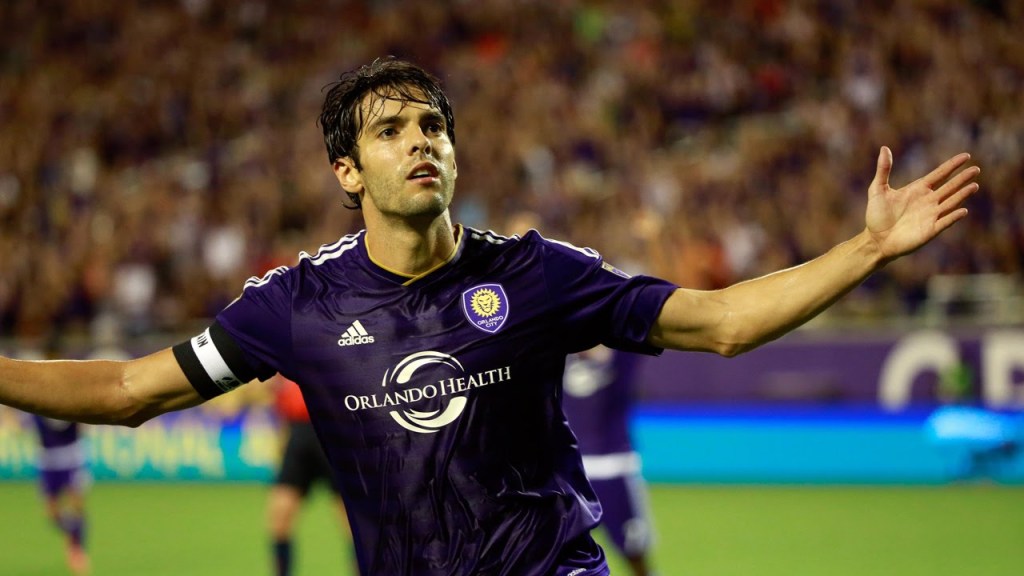
    Kaka playing in the MLS for Orlando City.

    Kaká was named the first Designated Player for Orlando City SC, an MLS expansion team, in 2014. He was chosen for the 2015 and 2016 MLS All-Star squad because of his leadership and abilities, which raised the team’s profile.

    Brazil’s International Glory

    In 2002, Kaká was the youngest player on the Brazilian national team that won the FIFA World Cup. His international career includes that tournament. Additionally, he was instrumental in Brazil’s 2005 and 2009 FIFA Confederations Cup triumphs.
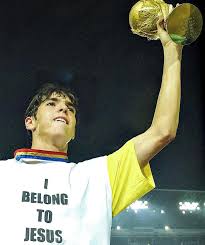
    Kaka holding the 2002 FIFA World Cup trophy.

    Kaká was well known for his graceful style of play, which combined technical skill, quickness, and vision. He was a dynamic and dangerous opponent because of his ability to score from distance, make accurate passes, and drive forward from midfield.

    Kaka scoring in the FIFA Confederations cup in 2009 in South Africa

    Inspiration and Faith

    Kaká was a staunch Christian who regularly shared his beliefs both on and off the field. He became famous for his “I Belong to Jesus” undershirt celebration, which represented his thankfulness and commitment to his convictions. Many admirers around the world were impressed by this open demonstration of faith. In the 2007 FIFA Best Player award ceremony speech, Kaka mentioned that, When I was young, I dreamt of playing for Sao Paulo and playing one game for the national team, but the Bible says that God can give us more than we ask or imagine, and that is what has happened to me today. Thank you”
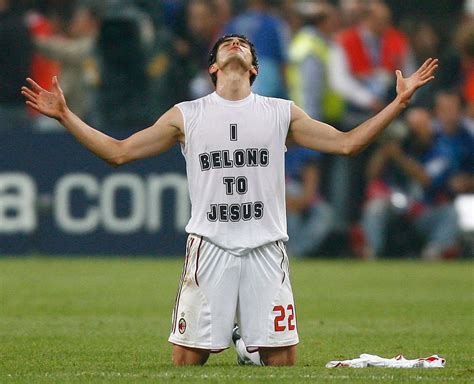
    Kaka displaying his "I belong to Jesus" vest after winning the 2007 UEFA champions league against liverpool.

    Life Beyond Football 

    Kaka (2nd from the right) with Robert Pires (1st from the left), Roberto Carlos (2nd from the left), & Clarence Seedorf (1st from the right) in UEFA charity game, May 30, 2024.

    Kaká has continued to play football after retirement, showing interest in positions in club development and management. Additionally, he has pursued entrepreneurial endeavours and remains a constructive member of the football community.

    The impact of Ricardo Kaká goes beyond his on-field accomplishments. His special blend of talent, modesty, and faith has made a lasting impression on the football world.
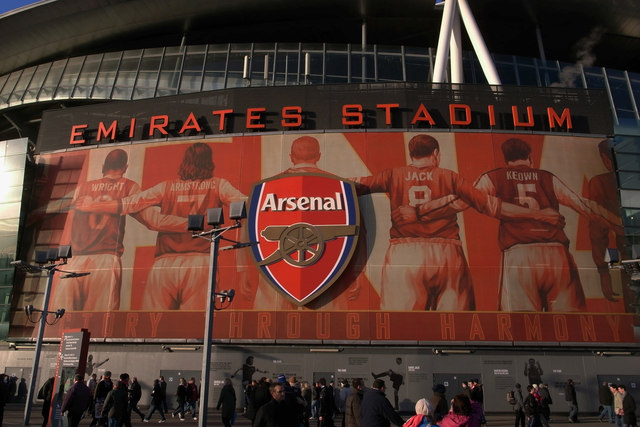
  • Masters of Mediocrity: A 20-Year Masterclass by Arsenal Football Club

    Masters of Mediocrity: A 20-Year Masterclass by Arsenal Football Club

    The Craft of Nearly

    From that incredible 2003–04 campaign, Arsenal has perfected the art of “almost,” nearly competing with the best, nearly dominating Europe, nearly winning the league, and nearly retaining their top players. It’s amazing how a team with such a strong financial position and illustrious past can continually fall short at the most important times.

    The cry, “This is our year!” has grown commonplace among fans, but it is quickly followed by a mid-season meltdown, an injury crisis, and, finally, the depressing acceptance of finishing in fourth place—until they began to miss it too. For a while, it appeared like Arsène Wenger was more proud of earning Champions League qualifying than real hardware, and the infamous term “fourth-place trophy” was created (Wilson, 2019).

    A Farewell Present: Legends’ Departure

    Seeing your finest players win titles elsewhere after selling them to competitors is the epitome of “we’re a top club.” Arsenal has refined this wonderful heritage. A number of players, including Samir Nasri, Alexis Sánchez, Robin van Persie, and Cesc Fàbregas, have frequently left the Emirates in pursuit of, well, success.

    Van Persie’s move to Manchester United was especially lyrical. He came to Old Trafford and won the Premier League title right away after spending eight years at Arsenal with no wins at all (Taylor, 2013). He may have chuckled as he accepted his Premier League winning gold, murmuring, “So this is what ambition looks like.”

    Hunting for Trophies in the Incorrect Forest

    For a team that takes immense pride in its past, Arsenal has obligingly avoided expanding its collection over the past 20 years. Let’s face it, the FA Cup is the football equivalent of receiving a participation medal, even though it has been a reassuring consolation reward.

    The Cup of Carabaos? Let’s not even talk about that. To avoid damaging their image of never winning, Arsenal has advanced to the finals (Harris, 2022).

    Europe? That is a more serious joke. The only other occasion Arsenal ever came close to winning a European championship was when they lost to Barcelona in the closing minutes of their Champions League final in 2006 (Smith, 2006). Since then, there has been a combination of humiliating losses, early departures, and the sporadic Europa League campaign that unavoidably fails.

    Owners: The Quiet Participants in Failure

    Arsenal has had Stan Kroenke, but other teams have profited from ambitious ownership prepared to make significant financial investments in success. The American entrepreneur, popularly referred to as “Silent Stan,” has shown the type of leadership that gives the appearance of vitality to a tortoise. Arsenal has changed under his leadership from a team that won titles to one that celebrates being in the top four as though they had won the Champions League (Jones, 2021).

    Kroenke obviously knows how to win, as evidenced by the fact that his previous endeavours, such as the NFL’s LA Rams and the NBA’s Denver Nuggets, have won their respective titles. However, he doesn’t appear to want to employ that magic recipe with Arsenal.

    The Highest Price for the Lowest

    The devotion of Arsenal supporters is so strong that they are prepared to pay the highest Premier League ticket costs for a team that only brings heartache. Hundreds of people swarm the Emirates Stadium every year to see their team demand exorbitant prices for mediocre performances. It’s a very remarkable accomplishment. It would be ideal if the team’s pricing strategy aligned with its on-field goals (Mitchell, 2023).

    Hope or More of the Same for the Future?

    Arsenal has made some progress under Mikel Arteta. Even though they nearly challenged for the title in 2022–2023 and 2023–2024, they ultimately lost. It’s similar to seeing a sad play when you know how it will end but are drawn in by the drama.

    What comes next, then? Another January disaster, another promising start, and yet another year of Arsenal supporters telling themselves, “Next season will be different.” Will it, though? If Arsenal doesn’t operate like a real European powerhouse by making wise investments, retaining its finest players, and holding its owners to higher standards, the team will continue to perform mediocrely.

    At least they have the FA Cup till then. There is no doubt that a participation medal is gleaming in its display case.

    References

    • Harris, J. (2022). Arsenal’s League Cup Failures: A Historical Review. The Guardian.
    • Jones, P. (2021). Stan Kroenke and the Business of Arsenal. Financial Times.
    • Mitchell, L. (2023). The Economics of Football: Arsenal and Ticket Prices. BBC Sport.
    • Smith, R. (2006). Champions League Final: Arsenal’s Heartbreak in Paris. ESPN.
    • Taylor, D. (2013). *Van Persie: From Arsenal to Premier